
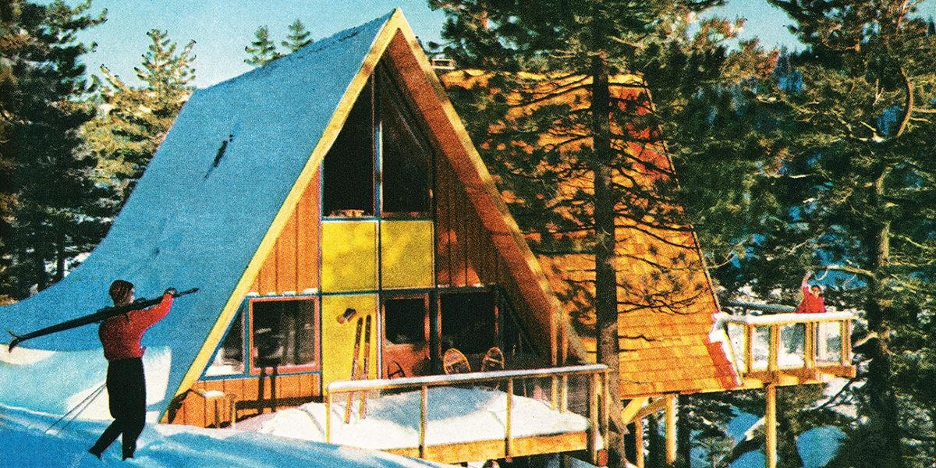
The A-frame house occupies a distinctive place in the architectural imagination—instantly recognizable, structurally efficient, and deeply tied to leisure. Defined by its steeply angled roofline that forms a triangular silhouette, the style feels both primitive and modern, equally at home in dense forests or perched along alpine ridgelines. Across the Upper East’s Adirondacks, the Mid-Atlantic’s Blue Ridge, the Southeast’s Smoky Mountains, and the expansive Western ranges from Colorado to the Pacific Northwest and California’s Sierra Nevada, A-frames continue to signal retreat.
For a savvy mountain homeowner, the appeal is not just aesthetic. The design responds directly to environmental demands: heavy snowfall sheds easily from the roof, while compact footprints minimize site disruption. Inside, the soaring ceilings and exposed rafters create an atmosphere that feels expansive despite modest square footage.
Yet the A-frame is as much an ideology as a structure. It represents a shift in how Americans approached leisure in the mid-20th century—prioritizing escape, simplicity, and immersion in nature. While not always practical for everyday living, its enduring popularity as a vacation home speaks to something more emotional: a desire for architecture that feels like a departure from routine rather than an extension of it.
What Defines an A-Frame Home?
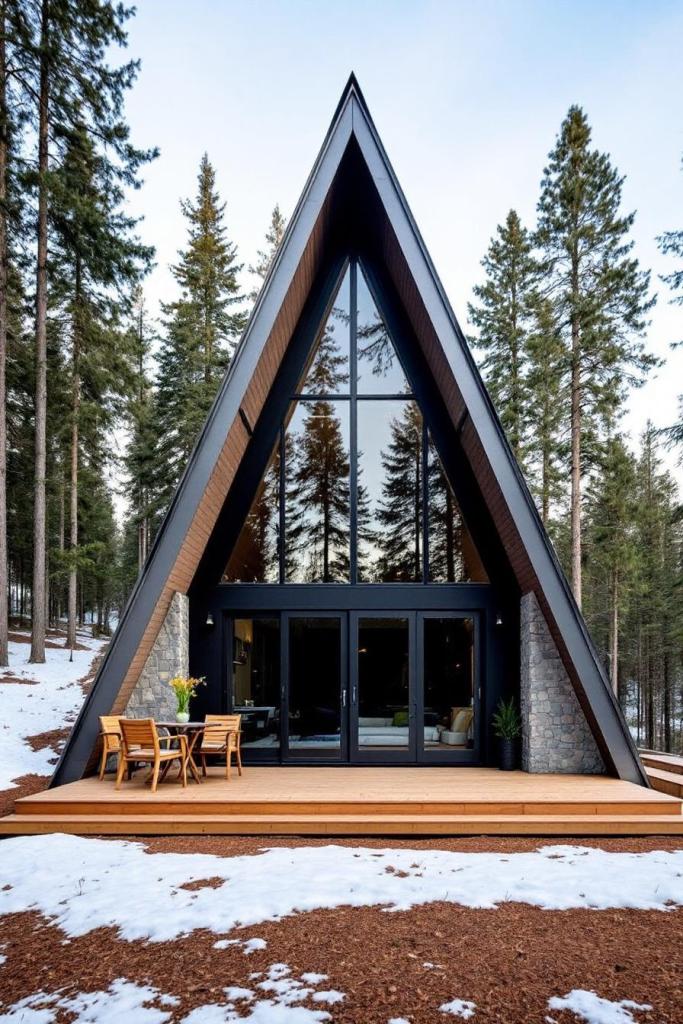
At its core, the A-frame is defined by geometry. The structure is both roof and wall, creating a continuous triangular form that extends nearly to the ground.
Exterior characteristics:
- Steeply pitched roof forming an “A” shape
- Minimal vertical walls; roofline often reaches ground level
- Large front-facing windows, often a full glass façade
- Simple materials such as wood, stone, and metal roofing
- Compact footprint suited to wooded or sloped terrain
Interior characteristics:
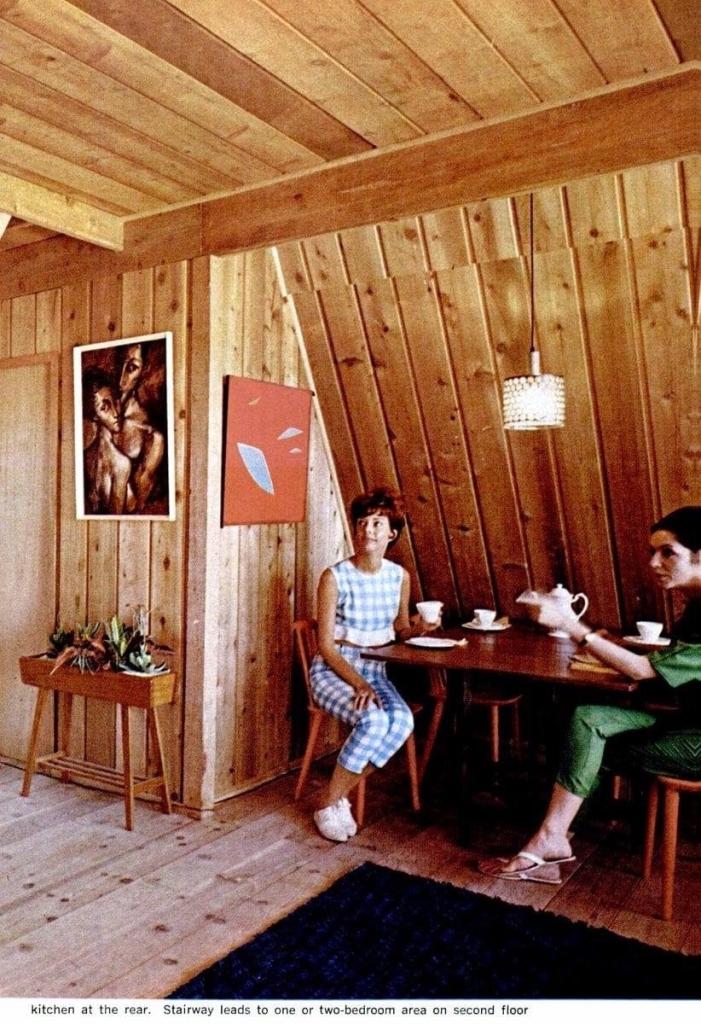
- Vaulted ceilings with exposed beams
- Lofted sleeping areas tucked beneath the peak
- Open-plan living spaces centered around a fireplace
- Limited vertical wall space, influencing furniture placement
- Strong visual connection to the outdoors
In Northern mountainous regions such as Vermont and New Hampshire, these features efficiently manage snow loads. In Colorado and the broader Western ranges, expansive glazing frames dramatic views, while in the Pacific Northwest, steep pitches and deep overhangs handle persistent rain. Across California’s mountain regions, A-frames often take on a more modern edge, incorporating glass and steel alongside traditional timber.
A Brief History of the A-Frame in the U.S.
Although triangular structures date back centuries, the A-frame gained traction in the United States during the 1950s and 1960s. Architect Andrew Geller helped popularize the form through experimental vacation homes in coastal and wooded settings.
Postwar prosperity, increased car ownership, and the rise of ski culture fueled demand for second homes. A-frames were relatively inexpensive to build, easy to assemble, and well-suited to rugged landscapes. They became synonymous with weekend escapes—from the Catskills and Poconos in the Upper East and Mid-Atlantic to the Rockies and Cascades out West.
Their affordability and DIY-friendly construction kits made them widely accessible, embedding the A-frame into the cultural fabric as the archetypal “weekender” retreat.
Advantages of Living or Vacationing in an A-Frame
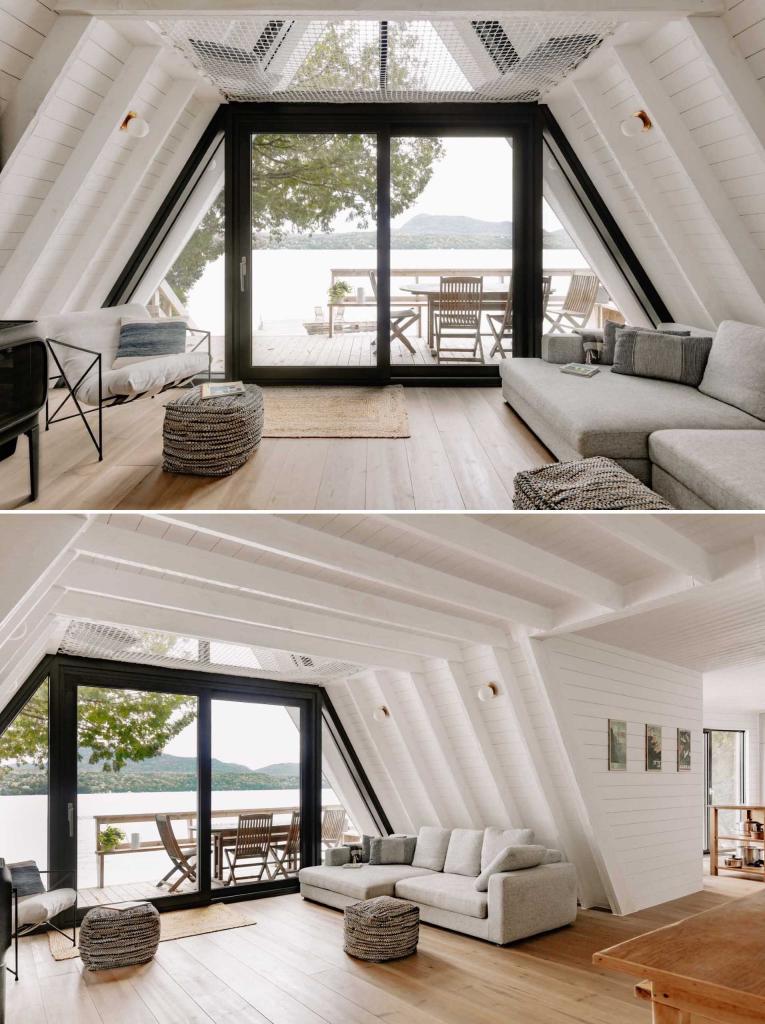
The advantages of A-frame living are closely tied to experience rather than pure function.
- Efficient snow management: Ideal for Upper East, Northern, and Western mountain climates
- Strong indoor-outdoor connection: Expansive glazing brings in forests, ridgelines, and changing light
- Compact, low-maintenance footprint: Especially appealing for secondary properties
- Atmosphere: The combination of height, wood, and light creates a sense of retreat
- Cost efficiency: Economical to build and maintain
For mountain homeowners, the A-frame offers something increasingly rare: a property that feels intentionally different from primary residences. It’s not trying to replicate suburban comfort—it’s offering an alternative.
Disadvantages—and How to Address Them
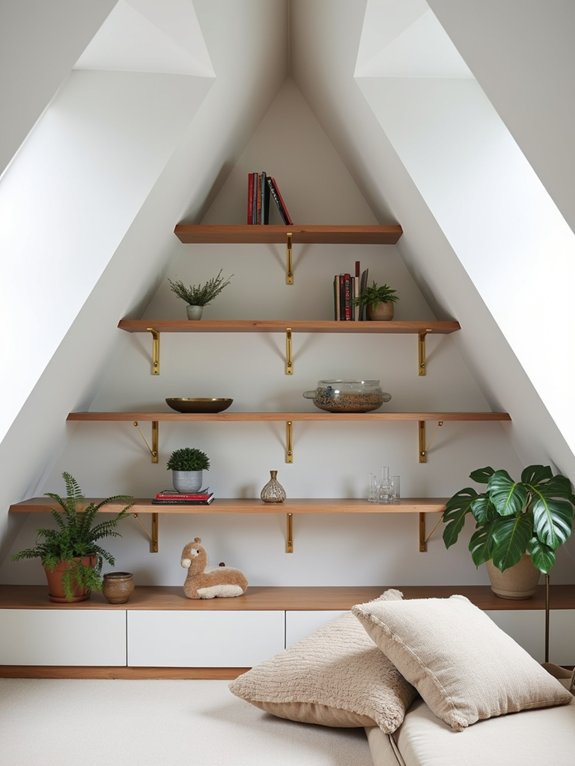
From a modern perspective, A-frames are not without compromise. They often do not function as efficiently as traditional square-walled homes for full-time living.
Common challenges:
- Limited head height and usable floor space
- Storage constraints
- Heating and cooling inefficiencies
- Difficult wall angles for furniture and artwork
Smart solutions:
- Heating and cooling:
Install ductless mini-split systems for targeted climate control—especially effective in the Southeast and Mid-Atlantic, where humidity is a factor. Radiant floor heating works well in colder Northern and Western regions. - Storage:
Incorporate custom built-ins along knee walls, under stairs, and beneath lofts. - Space planning:
Use low-profile furniture and multi-functional pieces to maximize livability. - Artwork and décor:
Lean artwork on ledges, use cable-hanging systems, or create gallery moments on vertical surfaces such as the front façade wall.
These interventions don’t eliminate the quirks, but they make them manageable—particularly for shorter stays.
Why A-Frames Remain the Quintessential Mountain Vacation Retreat
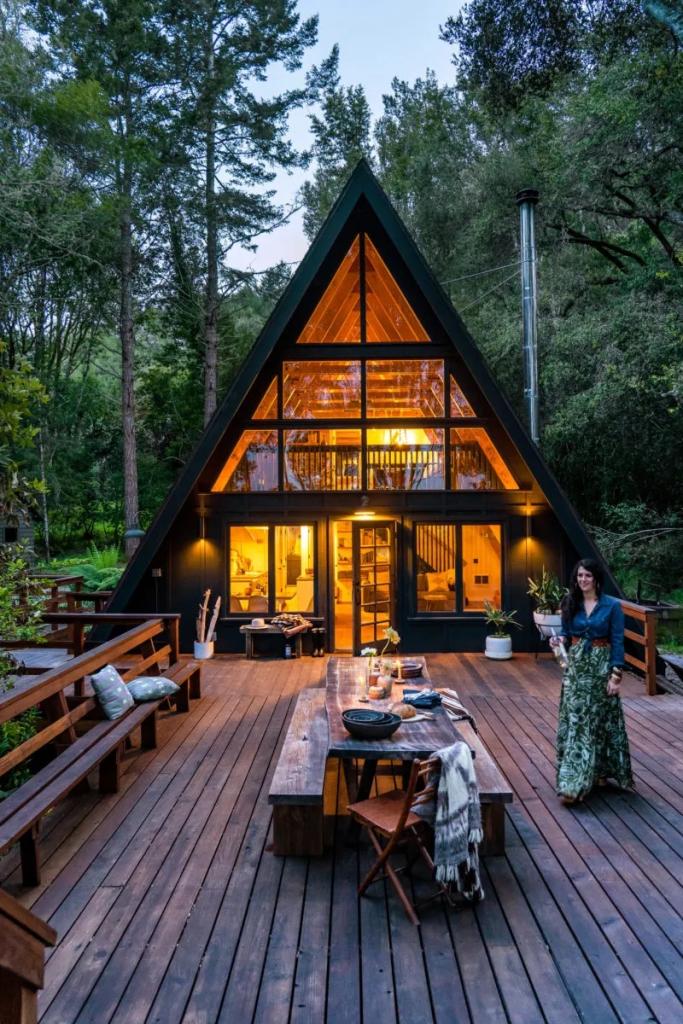
The enduring appeal of the A-frame lies in its identity as an escape. Many were originally built as vacation homes in the mid-20th century, and that association persists. They are, almost by definition, not entirely practical—which is precisely the point.
In regions like the Smoky Mountains, the Adirondacks, Colorado’s high country, the Cascades, and California’s Sierra Nevada, A-frames create a clear psychological boundary between daily life and retreat. Their compact scale, steep geometry, and cabin-like interiors evoke a “tiny house” sensibility that encourages a slower pace.
For full-time living, limitations such as storage, head height, and floor space can become points of friction over time. But for shorter getaways, those same qualities feel intentional. They strip away excess and shift focus outward—toward snowfall, tree lines, and shifting mountain light.
The A-frame endures not because it resolves every architectural challenge, but because it offers something many homes do not: a defined sense of place. Across the mountain regions of the United States—from the Upper East to the Pacific Northwest and California—it continues to serve as a retreat that prioritizes experience over efficiency. While its limitations make it less suited to everyday family life, those same constraints reinforce its value as a vacation property. In a landscape of increasingly optimized homes, the A-frame remains compelling precisely because it invites you to step outside of routine and engage more directly with the environment around you. For more on living your best mountain life, visit Mountain Homes Lifestyles.